Amazing culture is consistent behavior, not occasional effort
People don’t wonder how they’ll be treated depending on who’s working or how busy it is. Standards of respect, communication, and support stay steady under pressure—not just when things are calm.
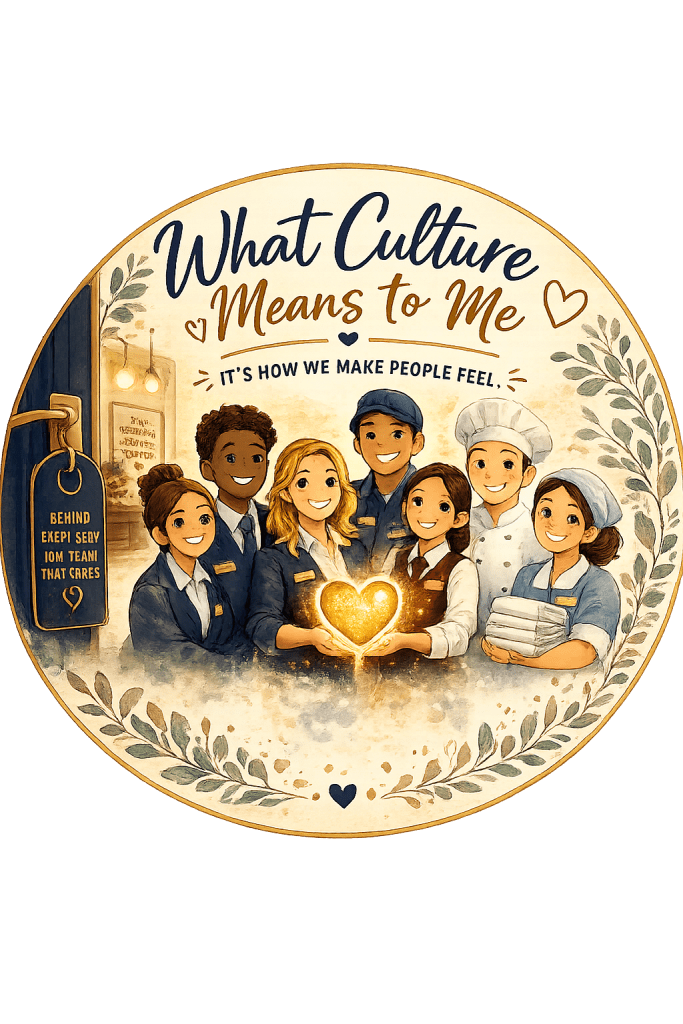
What Culture Means to Me
People ask me all the time, “What is culture?”
To me, culture isn’t a mission statement hanging on a wall. It isn’t a slogan printed on a coffee mug or a value tucked away in an employee handbook.
Culture is what people experience when no one is watching.
It’s how we treat each other on our hardest days. It’s the conversations we have behind closed doors, the way we respond when someone makes a mistake, and the standards we choose to uphold even when taking shortcuts would be easier.
In hospitality, culture is everything.
It’s the housekeeper who notices a guest is struggling and offers a helping hand. It’s the maintenance technician who stays late because they care. It’s the front desk agent who welcomes every guest with genuine kindness—not because they have to, but because that’s who they are.
Culture isn’t built by one speech.
It isn’t created during one team meeting.
It’s built through thousands of small decisions made every single day.
As a leader, I’ve learned that culture starts with me.
The way I communicate.
The way I recognize people.
The way I hold others accountable.
The way I respond under pressure.
My team doesn’t just hear what I say—they watch what I do.
If I want trust, I have to give trust.
If I want respect, I have to show respect.
If I want accountability, I have to model accountability.
Culture is contagious.
Every interaction either strengthens it or weakens it.
Behind every successful hotel, every thriving business, and every great leader is a culture that makes people feel valued, challenged, supported, and inspired to give their best.
That’s what Behind the Lobby Doors is all about.
Looking beyond the polished lobby and perfect guest experience to explore what truly creates extraordinary teams.
Because long after guests forget the room number they stayed in, they’ll remember how people made them feel.
And behind every unforgettable experience…
…is a remarkable culture.
Amazing culture is consistent behavior, not occasional effort
People don’t wonder how they’ll be treated depending on who’s working or how busy it is. Standards of respect, communication, and support stay steady under pressure—not just when things are calm.
People feel safe speaking up early
In strong cultures, employees don’t wait until they’re overwhelmed or burned out to say something. They feel comfortable raising concerns about workload, mistakes, or stress without fear of punishment or judgment.
Silence is not mistaken for “everything is fine.”
Leaders are predictable in the best way
Managers don’t lead through mood or stress reactions. They respond with clarity, fairness, and stability—even on difficult days.
Teams don’t have to “guess” how leadership will react.
Workload is respected as much as performance
High performance is expected, but not at the cost of exhaustion. In a strong culture:
- Breaks are normal, not negotiated
- Time off is respected
- Staffing gaps are addressed, not ignored
- Burnout is treated as a signal, not a failure
Recognition is real and regular
People are noticed for effort, consistency, teamwork, and problem-solving—not just numbers. And recognition isn’t saved for annual awards; it happens in the moment.
What gets appreciated gets repeated.
Accountability exists without fear
Standards are clear, and people are held to them—but correction is focused on improvement, not embarrassment or blame. The goal is performance growth, not punishment.
Teams support each other, not just their roles
In a strong culture, departments don’t operate in silos. Housekeeping helps front desk during pressure points, front desk respects housekeeping workload, maintenance is looped in early—not as an afterthought.
People think like one operation, not separate islands.
Leadership is visible and engaged
Leaders don’t disappear into offices or only show up when something goes wrong. They’re present in the operation, aware of the pace, and connected to the reality of the work.
Mental health is part of how work is managed
Stress is acknowledged, not ignored. Leaders understand that sustained performance depends on recovery, workload balance, and emotional support—not just pushing harder.
What is Culture?
Culture begins with you, every interaction, every decision, every moment—you set the tone for what our workplace becomes.
It’s not just policies or leadership—it’s how each of us shows up every day.
- How we treat each other
- How we respond under pressure
- How we create experiences for our guests
We are the recipe. Every action is an ingredient. So Let’s Get Cooking!
The Core Ingredients
The Base – Ownership
Every great recipe starts with a solid base.
Ownership means taking responsibility for your actions, your attitude, and your impact.
Without it, nothing else holds together
The Flavor – Attitude
Your attitude shapes the environment around you.
Positive energy is contagious—and so is negativity.
You decide what flavor you bring to the team.
The Structure – Accountability
This is what keeps everything consistent.
Doing the right thing, even when no one is watching, builds trust across the team.
The Binding Ingredient – Teamwork
No recipe works if the ingredients don’t come together.
Supporting one another, stepping in when needed, and communicating openly creates unity.
The Final Presentation – Experience
This is what our guests and team members remember.
Every interaction is a chance to create a moment that lasts.
Bringing It All Together
Just like any recipe, the outcome depends on what you put into it.
You can have all the right ingredients…
but if one is missing—or done without care—the result changes.
That’s why it starts with you.
 Behind The Lobby Doors